Source first
No patch goes up until we know where the water came from.
Water stain, bubbling paint or a ceiling that's starting to sag? We find where the water is coming from, dry the ceiling properly, and rebuild it so you can't tell where the damage was.
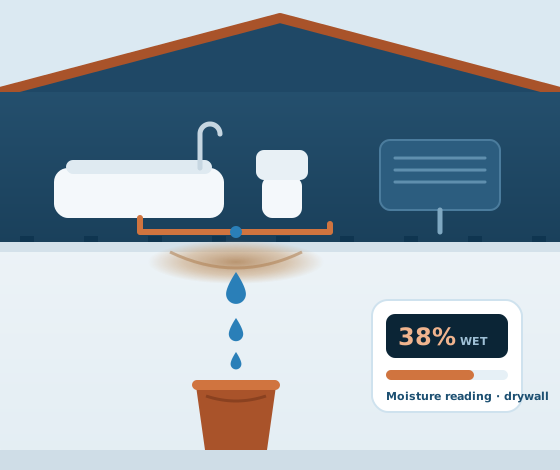
Do these three things first, then call or text us.
The quickest way to an accurate estimate is a photo. Call or text us and tell us what you're seeing.
We reply with a realistic first impression, then a written, line-item estimate after we've inspected the ceiling.
No patch goes up until we know where the water came from.
Readings in the drywall and framing, not a guess.
Texture matched, whole ceiling repainted.
Line-item estimate, photos and moisture log.
Most companies do one piece of this job. A plumber fixes the pipe and leaves a hole. A dry-out company runs fans and leaves bare joists. A painter covers the stain and the stain comes back.
We handle the whole job on one schedule: trace the leak, get it stopped, dry and test the ceiling cavity, rebuild the drywall, and finish it to match. You deal with one crew and one written estimate.

Pick the one that sounds like your ceiling. Each page explains the problem, how we fix it and what it involves.

Water coming through right now? Safety steps, safe draining of a ceiling bubble, and a crew to stop the damage.

Stains that grow every time it rains. We trace the leak on tile and shingle roofs and repair the ceiling below.
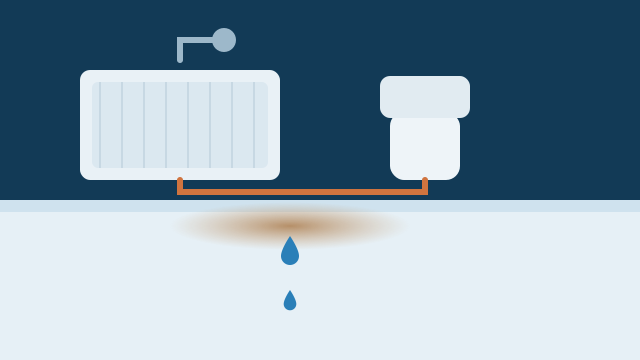
Stain under an upstairs shower, tub or toilet. We pin down which fixture is leaking and repair the ceiling below.
Soft, cracked or crumbling sheetrock cut back to solid framing, replaced, taped and finished flat.

Drooping, bulging or partly collapsed ceilings made safe, re-secured or replaced, with the cause found first.

Knockdown, orange peel, skip trowel or smooth, blended and repainted so the repair disappears.

Stained or soaked acoustic texture. Tested before it's disturbed, then repaired, covered or removed.

What actually drives the price, and how to compare quotes line by line.

The photos, moisture readings and written estimate your adjuster will ask for.
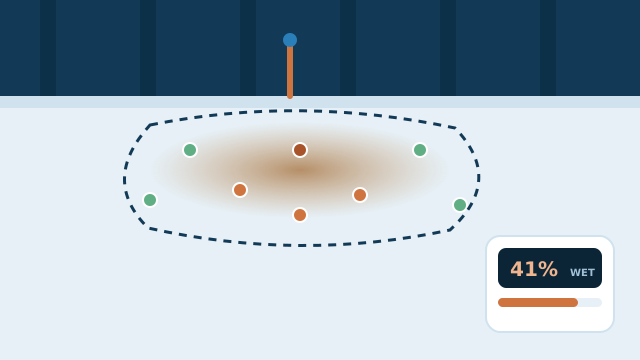
A stain with no obvious cause. We trace it with moisture readings, isolation tests and a small inspection opening.

Summer stain near a vent or attic hatch. Clogged condensate lines and rusted pans fixed, then the ceiling below.
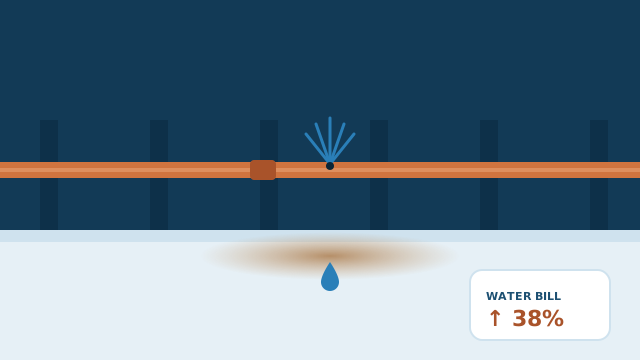
Pinhole leaks, failed fittings and dripping drains inside the ceiling, opened, repaired and closed up properly.
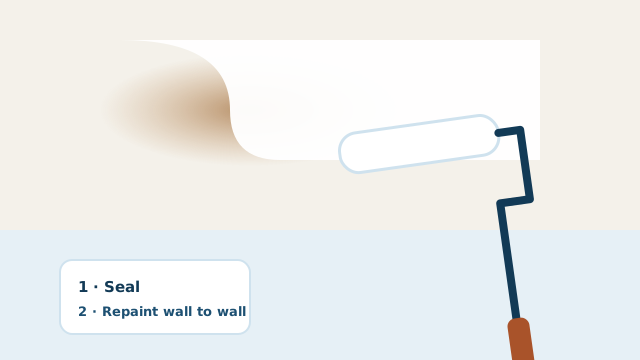
Dry stains sealed with the right primer and the ceiling repainted, after we confirm the leak is really over.

Wet ceilings and walls taken out where needed, the structure dried to measured readings, then rebuilt.
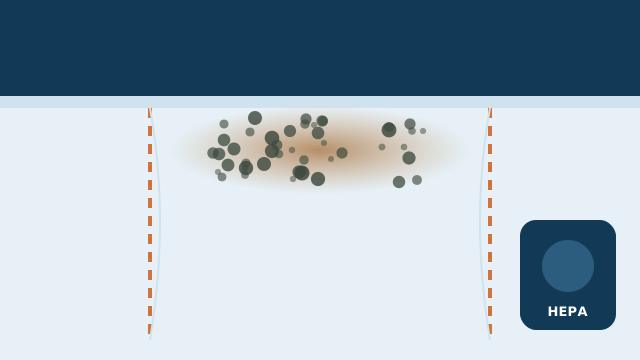
Moldy drywall and insulation removed under containment, the framing cleaned, the source fixed, then rebuilt.
Also: burst pipes · ceiling drying · wet insulation · water from a light or fan · condo & townhome leaks · plumber access holes · rebuild after a dry-out · guides · all questions
A ceiling stain is a symptom, not the problem. In Diamond Bar, where the typical home was built around 1980, the same handful of causes show up again and again.
Almost all of our rain comes between November and March. After a long dry summer, a cracked tile or dried-out pipe boot stays hidden until the first real storm.
The tell: a stain near an outside wall, chimney or skylight that grows each time it rains.
Roof leak detectionStrong offshore winds lift and crack the concrete and clay tiles on many homes here. Nothing leaks until the next storm, so most people never connect the two.
The tell: a new stain after the first rain that follows a wind event, often on ridgeline and canyon-edge homes.
Two-story tract homes from the '70s through the '90s often put a bathroom right over the family room, kitchen or entry. Shower pans, wax rings and supply lines drip slowly for months.
The tell: a stain under a bathroom that darkens after someone showers.
Bathroom leak repairWhere the air handler sits in the attic, a clogged condensate line or rusted drain pan sends water straight through the ceiling on hot afternoons.
The tell: a stain near the hallway return or attic hatch in summer, when it hasn't rained for months.
Many homes still have their original copper supply lines. Pinholes can spray inside a ceiling for weeks before anything shows. A jump in the water bill is often the first clue.
Worth knowing: Walnut Valley Water District covers its own equipment such as the meter; leaks on your side of it are yours to fix.
In condos and townhomes the water often starts in someone else's unit or a shared pipe, and who pays depends on your HOA's CC&Rs.
What helps: written notice to your neighbor and HOA, plus photos, before anything is cut out.
A dry, firm stain that isn't growing usually isn't. One that's soft, sagging, growing or near a light fixture means water is still getting in, and that needs attention now.
Our guide Is a water stain on your ceiling dangerous? walks through a five-minute check. Not sure? Text us a photo and we'll tell you honestly whether it needs a visit. If the ceiling is already drooping, read can a ceiling collapse from water damage before anyone stands under it.
The 2008 Chino Hills earthquake was centered in the hills just south of Diamond Bar, and the strongest shaking was recorded around here. A good shake can loosen roof tiles and stress older plumbing joints without any immediate sign.
If you felt one, take a flashlight into the attic and look for damp insulation, drips on the ceiling drywall, or daylight around roof penetrations. Catching it before the rainy season saves a ceiling. Our earthquake ceiling damage guide explains which cracks matter.
Skipping steps is how people end up paying for the same repair twice.
Attic, roof, bathroom above or AC drain. No repair lasts if water is still coming.
Readings in the drywall and framing show how far it spread, usually further than the stain.
Inspection hole first, then cut back to the joists, with floors covered and the room sealed off.
Wet insulation out, cavity dried, new drywall hung, taped and finished in three coats.
Texture matched, repair primed, and the whole ceiling repainted wall to wall.
Repairs here go better when you know the housing, the weather and the local rules.
If your home was built before the early 1980s, the acoustic texture may contain asbestos. Don't scrape it. We have it tested first, then repair, cover or arrange removal under South Coast AQMD Rule 1403.
Popcorn ceiling repairA patch you can see from the couch isn't finished. Knockdown, orange peel, skip trowel and smooth ceilings each need a different technique, and the whole ceiling gets repainted so the sheen is even.
Ceiling texture matchingPrices online run from a few hundred dollars to several thousand because "ceiling repair" covers very different jobs. Size, texture, ceiling height, drying and asbestos testing are what move the number.
Ceiling repair cost guideWe give you what an adjuster asks for: dated photos, moisture readings and a line-item estimate. If you're on the California FAIR Plan, check whether you carry a separate policy for water damage.
Insurance claim helpFrom the hillside homes around Sycamore Canyon and Summit Ridge to the tracts off Golden Springs Drive and Pathfinder Road, the condos along Diamond Bar Boulevard and the custom homes behind the gates of The Country Estates.
Homes here range from the city's first 1960s houses on the north end to newer gated developments, and each brings its own ceiling problems. Our service area page explains what we see in each part of town.
Also: Silver-Meadow, Willow Heights, Chisolm, The High Country, Sunset Crossings, Diamond Canyon and the rest of the city.

Straight answers to what Diamond Bar homeowners ask us most.
Start with whoever can find the source, because the ceiling can't be fixed until the water stops. If you don't know where it's coming from, call us. We trace it, get it stopped, then repair the ceiling, so you aren't coordinating three companies and three schedules yourself.
Yes. Patching access holes and rebuilding ceilings after a dry-out crew has left is a big part of our work. We square up the opening, back it with framing, hang new drywall, match the texture and repaint the ceiling so it looks the way it did.
Stopping the leak and starting the drying usually happens on the first visit. Drywall can't be closed up until moisture readings are back to normal, which commonly takes a few days. The rebuild, texture and paint then take one to three more working days, depending on size and texture. A small patch on a ceiling that's already dry can often be finished in one or two visits.
Yes. Tell us your community when you call. In places like The Country Estates we arrange gate access ahead of time and follow the association's contractor rules, and for condos we document where the water came from so your HOA and your neighbor get the same information you do.
Someone needs to be there for the first visit so we can walk through what happened and look at the room above or the attic. After that, many customers leave a gate or lockbox code. We text before arriving and send photos at the end of each day.
A photo of the ceiling, the room it's in, what's above it (bathroom, attic, another unit or the roof) and whether it's still wet. That's usually enough for a realistic range. A written, line-item estimate follows the on-site inspection, before any work starts.